> For the complete documentation index, see [llms.txt](https://docs.mailrocket.io/llms.txt). Markdown versions of documentation pages are available by appending `.md` to page URLs; this page is available as [Markdown](https://docs.mailrocket.io/getting-started/advanced-features/personalized-email-templates.md).
# Personalized email templates
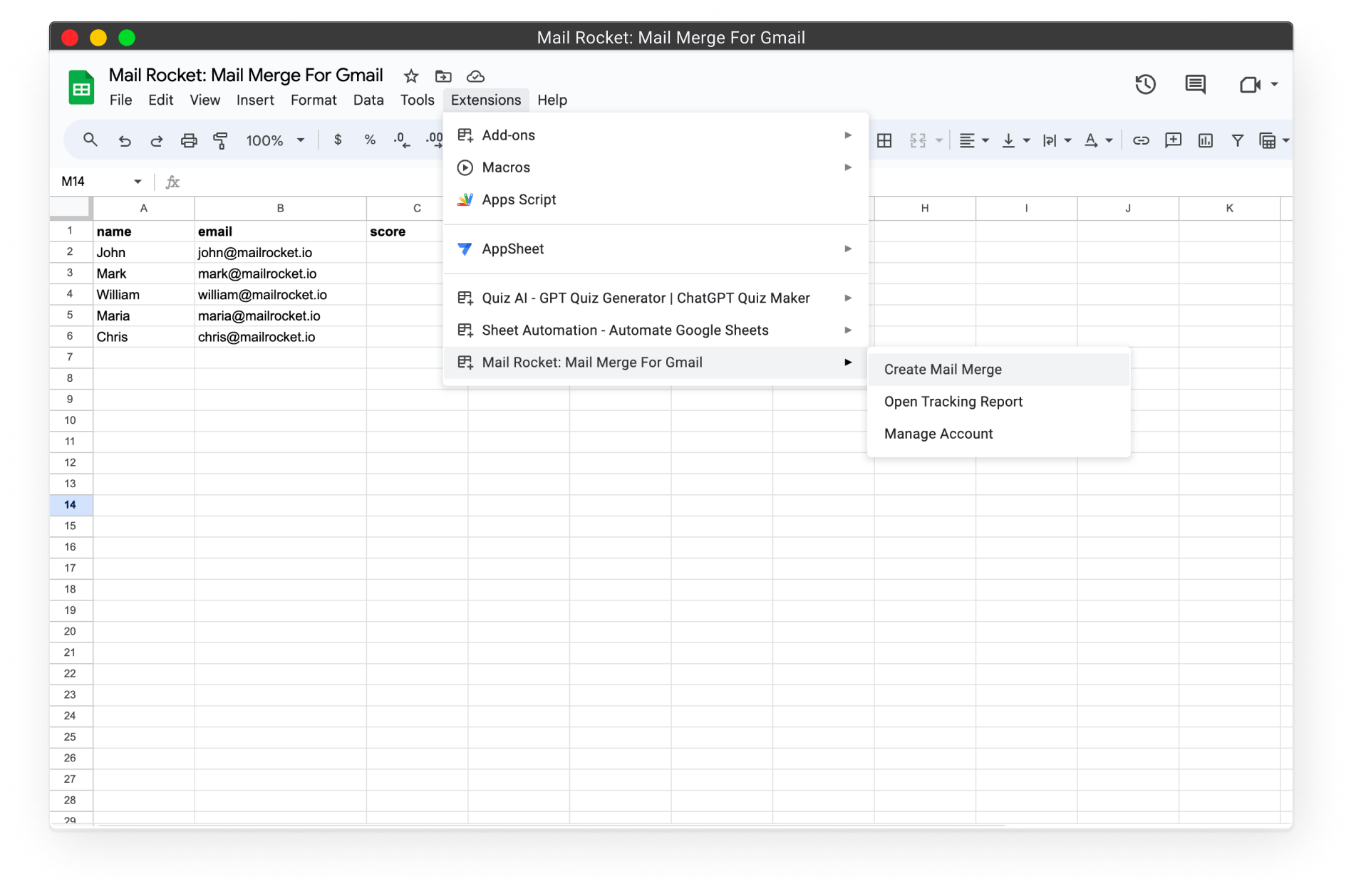
To create a new email template, start a new mail merge campaign by going to **extensions -> Mail Rocket: Mail Merge For Gmail -> Create a new Mail Merge Campaign** in your Google Sheet.
### **How to Personalize Email Content**
1. **Set Up Your Google Sheets Spreadsheet**:
* Open a new Google Sheets spreadsheet and add your contact list, ensuring each recipient's email address is in a separate row.
* Include columns for personalized variables (e.g., first name, guest, topic, city, conference).
2. **Insert Personalized Variables**:
* Use merge tags (e.g., {{ firstname }}) in your email content to dynamically populate personalized data from your spreadsheet.
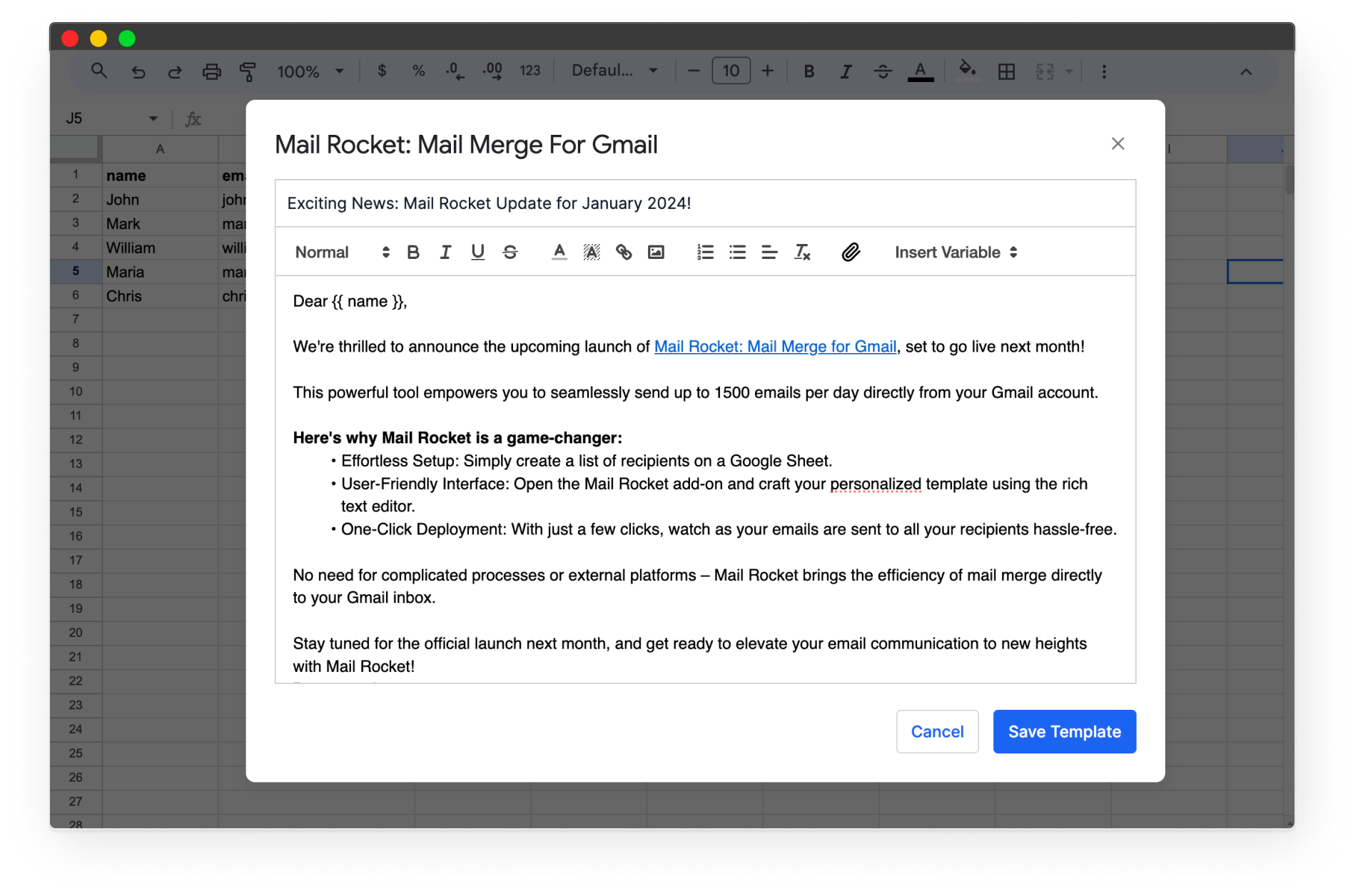
In the Email Template section, click "Create Email Template". Mail Rocket's advanced rich text email editor opens. Design your email template.
### The Editor Interface
1. **Text Size:** Heading (H1, H2, H3, H4) and normal body text are available.
2. **Links:** Add links to your email template.
3. **Attachments:** Insert various file attachments like PDFs, Word documents, images, and more
4. **Variables:** Insert any sheet column as a variable. This will replace the variable with the value present in that column for the current row. Eg: {{ name }}.
### Manage Templates
Mail Rocket provides the ability to edit existing templates and delete unwanted templates.
.png?alt=media&token=2be0577a-cb7e-449e-82dd-8883ee1f97c4)